


PPP 01, Nov 2025
Mumbai Metro Line 8: Connecting Mumbai & Navi Mumbai Airports — What It Means for Commuters, Business & Infrastructure Growth
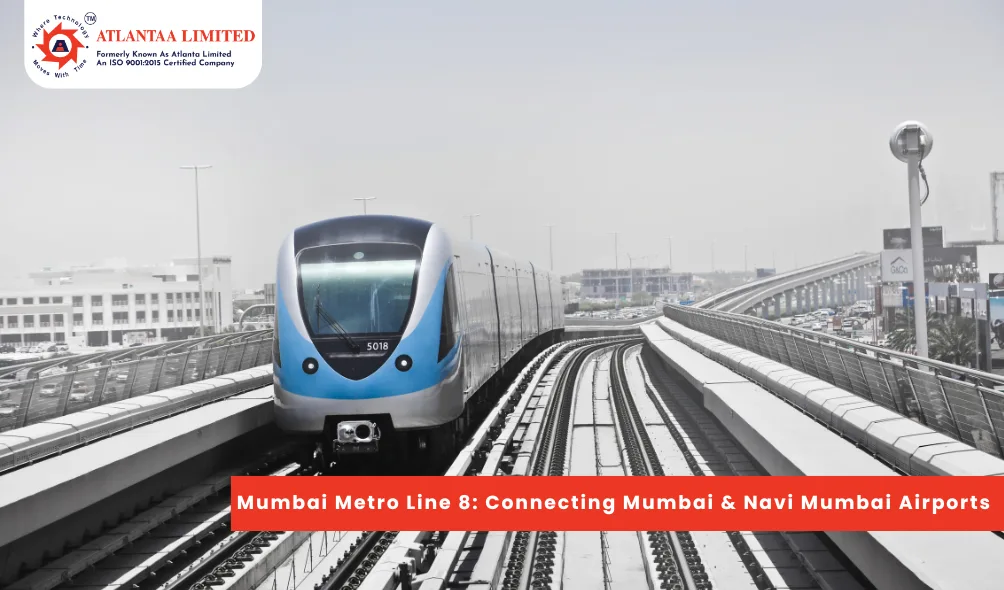
Mumbai’s transport future is entering a transformative phase. The planned Mumbai Metro Line 8 (Gold Line) designed to connect Chhatrapati Shivaji Maharaj International Airport (CSMIA) with Navi Mumbai International Airport (NMIA) is not just another metro project. It is a strategic infrastructure corridor that will reshape daily travel, real estate growth and long-term economic development across the Mumbai Metropolitan Region (MMR).
For everyday commuters, this means faster airport travel and reduced road congestion. For policymakers, developers and infrastructure professionals, it represents one of India’s most complex PPP infrastructure projects in recent years.
This blog explains the project in simple terms — and also explores why models like PPP, BOT and HAM are becoming critical for India’s next phase of urban infrastructure.
What is Mumbai Metro Line 8?
Mumbai Metro Line 8, also known as the Gold Line, is a planned metro corridor that will directly connect Mumbai’s existing international airport to the upcoming Navi Mumbai International Airport.
- Direct metro link between two major airports
- Faster travel time between Mumbai and Navi Mumbai
- Less dependency on road travel and taxis
- Reduced traffic on the Sion–Panvel Highway and Eastern Express Highway
Once completed, Metro Line will make airport travel significantly smoother for passengers while also improving overall urban mobility in the region.
Mumbai Metro Line 8 – Project Overview
As per publicly available project disclosures, the corridor has the following characteristics:
Key Project Highlights:
- Total Length: Approx. 34.km
- Stations: stations (underground + elevated)
- Execution Model: PPP / BOT with government support
- Estimated Project Cost: Approx. ₹23,crore
- Projected Daily Ridership (2031): ~lakh passengers per day
Key Alignment:
CSMIA (Terminal 2) → Chheda Nagar (underground stretch) → elevated corridor along Sion–Panvel Highway → Kurla → Mankhurd → Vashi → Nerul → Belapur → Navi Mumbai International Airport
This alignment also integrates with suburban rail, metro corridors and long-distance rail networks, creating a multi-modal transport backbone for MMR.
Why Metro Line 8 Is a Big Deal for Mumbai & Navi Mumbai
1) Benefits for Daily Commuters
- Shorter and predictable airport travel time
- Less traffic congestion on major highways
- Better public transport reliability
2) Boost for Business & Real Estate
- Metro connectivity typically drives:
- Higher commercial activity
- Growth in retail and office developments
- Increased demand for residential projects
Areas such as Vashi, Nerul, Belapur, Mankhurd and Ulwe are expected to benefit due to improved connectivity and infrastructure accessibility.
With infrastructure expansion accelerating around Navi Mumbai and the eastern suburbs, Shilphata, Thane is emerging as a high-potential residential destination for buyers and investors looking to benefit from upcoming metro-driven growth.
Atlantaa Enclave, Shilphata stands strategically located to leverage this connectivity advantage — offering modern homes with superior access to Mumbai, Navi Mumbai and key commercial zones.
Atlantaa Enclave, Shilphata – Premium Living Near Mumbai Metro Line 8 Growth Corridor
Understanding the PPP / BOT / HAM Models
Large projects like Mumbai Metro Line 8 are not funded and built like normal road projects.
They use advanced infrastructure development models such as:
PPP (Public-Private Partnership)
Government and private companies work together to share funding, risk and responsibility.
BOT (Build–Operate–Transfer)
A private company builds the project, operates it for a fixed time and then transfers it back to the government.
HAM (Hybrid Annuity Model)
A balanced model where the government pays part of the project cost and the private developer invests the rest.
These models are essential because mega-projects require:
- Financial strength
- Engineering expertise
- Long-term maintenance capability
Complex Engineering Behind Metro Line 8 is not a simple surface metro.
It involves:
- Underground tunnelling in dense urban areas
- Elevated viaducts and flyovers across highways and built-up zones
- River bridges and creek crossings in sensitive environmental zones
- Integration with existing roads, metro lines and railway corridors
This kind of infrastructure demands highly specialized EPC contracting expertise and experience in high-risk civil engineering.
What This Project Means for Infrastructure Professionals & Policymakers
For officials, planners and infrastructure stakeholders, Metro Line 8 represents:
- A test case for large-scale PPP urban transport infrastructure
- A benchmark for BOT and HAM project structuring
- A corridor that demands disciplined project governance, environmental compliance and risk management
Challenges include:
- Land acquisition
- Utility relocation
- Traffic management during construction
- Long-term O&M planning
Only organizations with proven credentials should participate in or execute such complex projects.
Where Do Companies Like Atlantaa Limited Fit In?
Firms with multi-decade experience in highways, bridges and corridor infrastructure are naturally aligned with such projects.
Atlantaa Limited’s expertise aligns with the core demands of Metro Line 8–style developments:
- Execution under BOT, DBFOT and EPC frameworks
- Experience in highway widening, bypasses, interchanges, viaducts and bridges
- Capability to handle integrated civil engineering across roads, structures and urban infrastructure
- Strong project management culture and long-term operational preparedness
This positioning allows infrastructure leaders to contribute meaningfully to India’s evolving metro and transport ecosystem.
Future of Urban Infrastructure in India
Mumbai Metro Line 8 is not just about trains and stations.
It signals:
- A shift toward airport-centric infrastructure planning
- Integrated urban mobility
- Transit-Oriented Development (TOD) growth
- Smarter, faster and more connected cities
For businesses, governments and citizens alike, such infrastructure corridors represent the future of Indian urban development.
Final Thoughts
For the general public, Mumbai Metro Line 8 promises faster travel and better quality of life.
For officials and infrastructure professionals, it represents one of the most technically complex and strategically important urban mobility projects in India.
Projects of this scale demand trusted experience, disciplined execution and long-term vision.
And that is where established infrastructure companies like Atlantaa Limited continue to build relevance.